Why Alocasia Is a Must-Have Houseplant
Alocasias are admired for their dramatic leaves, glossy finish, and bold presence. Each plant adds depth and character to indoor spaces - ideal for creating a tropical focal point or elevating your home décor.
They range from smaller table-top varieties to large statement plants, offering a style for every space. With proper light, humidity, and care, Alocasia rewards you with new growth, lush foliage, and an unmistakable jungle vibe that works beautifully in UK homes.
Alocasia Care Tips
Light:
Bright, indirect light is best. Too much direct sun can scorch the leaves; too little light can slow growth and fade the foliage.
Humidity:
These tropical plants love humidity. Mist regularly or place on a pebble tray, especially during winter when indoor air is dry.
Watering:
Keep soil evenly moist during spring and summer, but avoid letting it sit in water. Allow the top layer to dry slightly between waterings.
Temperature:
Maintain a warm, stable environment. Avoid cold drafts and sudden temperature changes.
Feeding:
Feed lightly every 3–4 weeks in the growing season using a balanced houseplant fertiliser.
Maintenance:
Remove yellowing leaves and wipe dust from foliage to help them breathe and absorb light effectively.
Dormancy:
Some Alocasia varieties slow growth in winter - this is normal. Reduce watering during this time and resume regular care in spring.
Frequently Asked Questions – Alocasia & Elephant Ear Plants
What is an Alocasia (Elephant Ear) plant?
Alocasia is a tropical genus known for its large, arrow-shaped leaves. Nicknamed “elephant ear” plants, they’re famous for their dramatic form and exotic appearance.
Where should I place my Alocasia?
Position it in bright, filtered light - near a window with sheer curtains or in a warm, well-lit room. Avoid direct sunlight and cold drafts.
How often should I water it?
Water when the top inch or two of soil feels dry. In warmer months, this might be every 7–10 days. Reduce watering in winter when the plant’s growth slows down.
Does Alocasia need humidity?
Yes - it thrives in humid environments. Mist leaves regularly or use a humidity tray to prevent leaf edges from browning.
Why are my Alocasia leaves drooping or yellowing?
This usually means overwatering or too little light. Check your soil moisture and light levels, and adjust accordingly.
Will my Alocasia lose leaves in winter?
Possibly. Many Alocasias enter a rest period during colder months. Don’t worry - with warmth and patience, new leaves will emerge in spring.
Is Alocasia pet-safe?
No - Alocasia is toxic to cats and dogs if ingested. Keep it out of reach of pets and children.
Our Promise
Each Alocasia from Between Two Thorns is hand-picked for health, beauty, and longevity. From compact desk plants to large statement specimens, every order is prepared with care and packaged sustainably for safe UK delivery. Bring a touch of the tropics home with our stunning Alocasia collection - bold, beautiful, and built to impress.


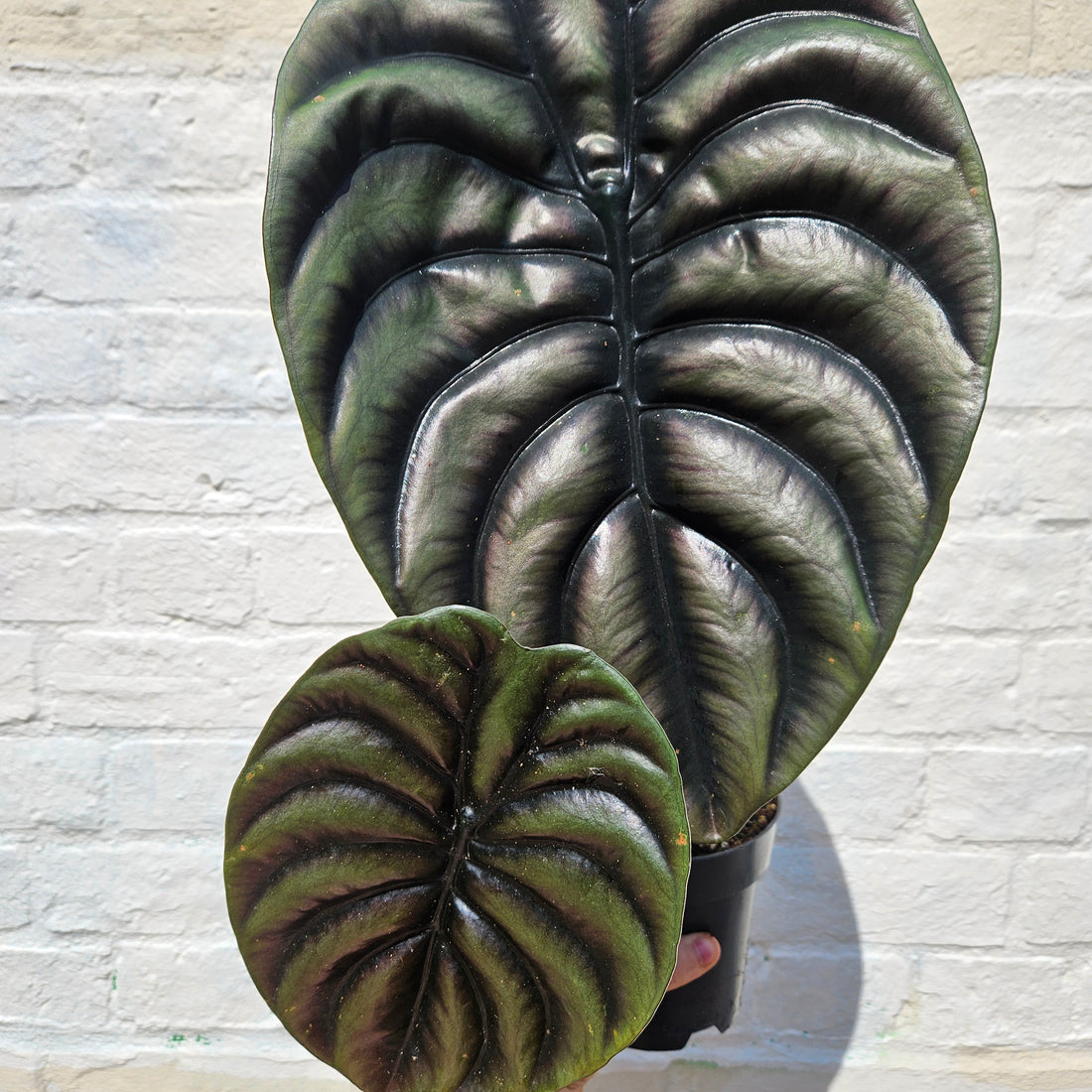
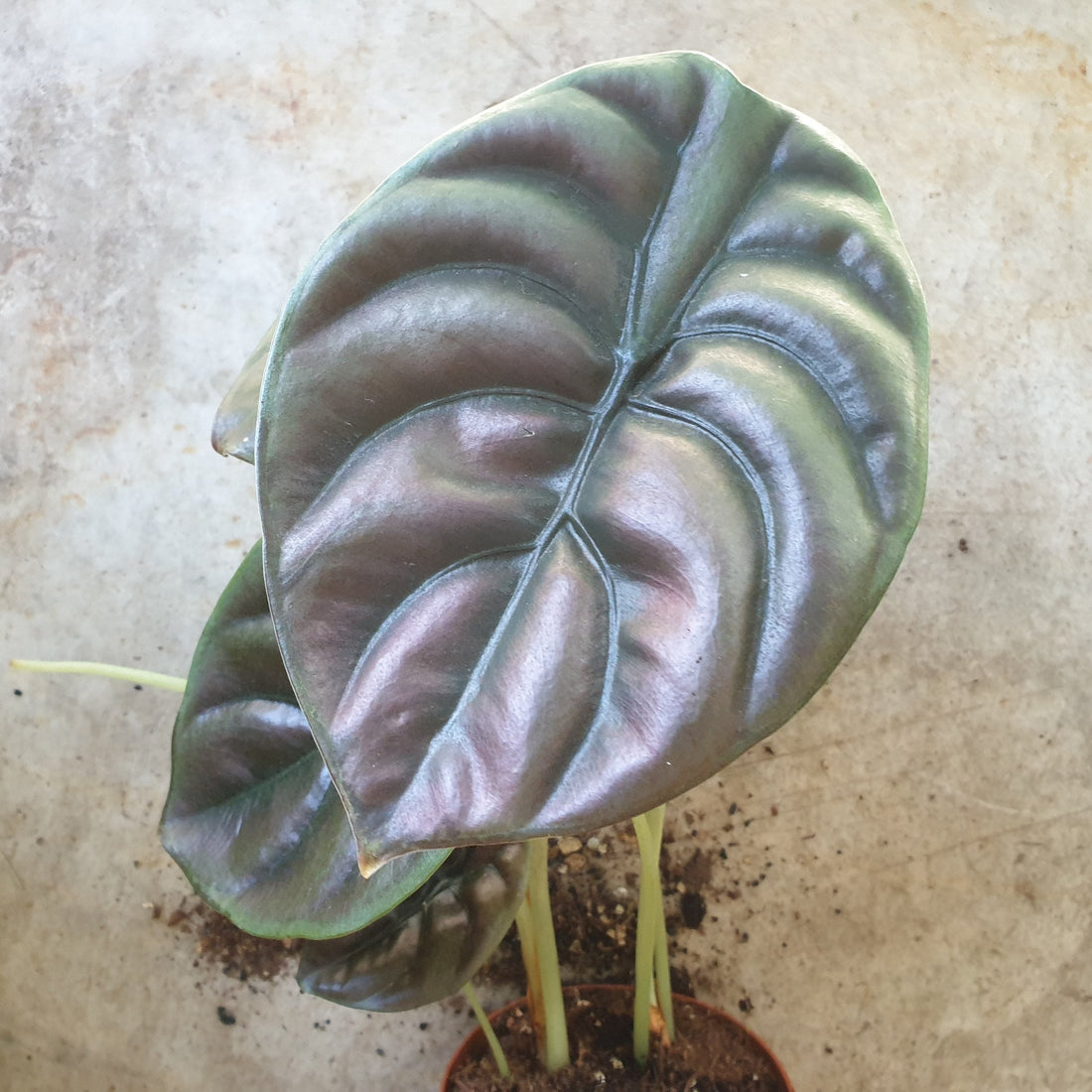 Alocasia cuprea 'Red secret'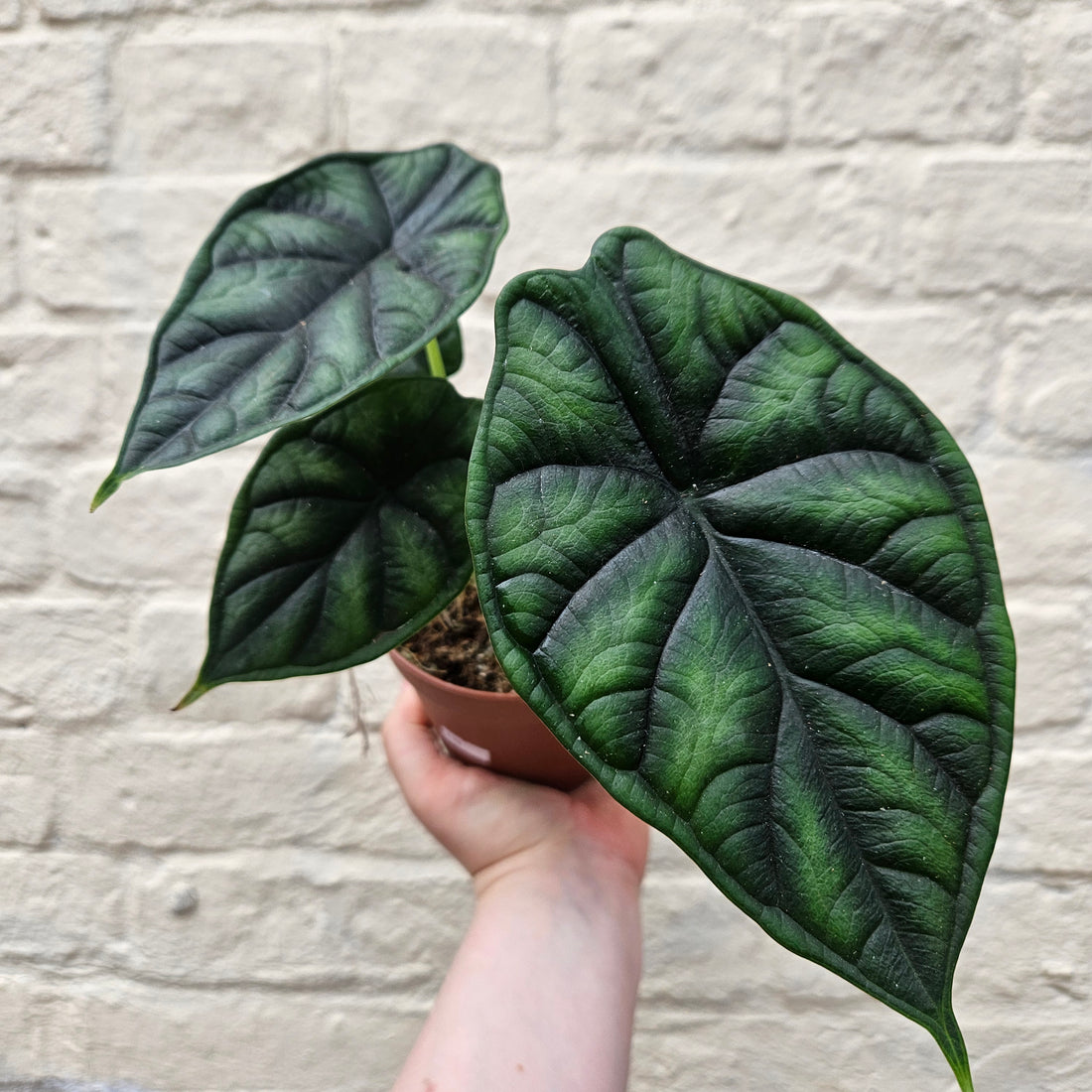
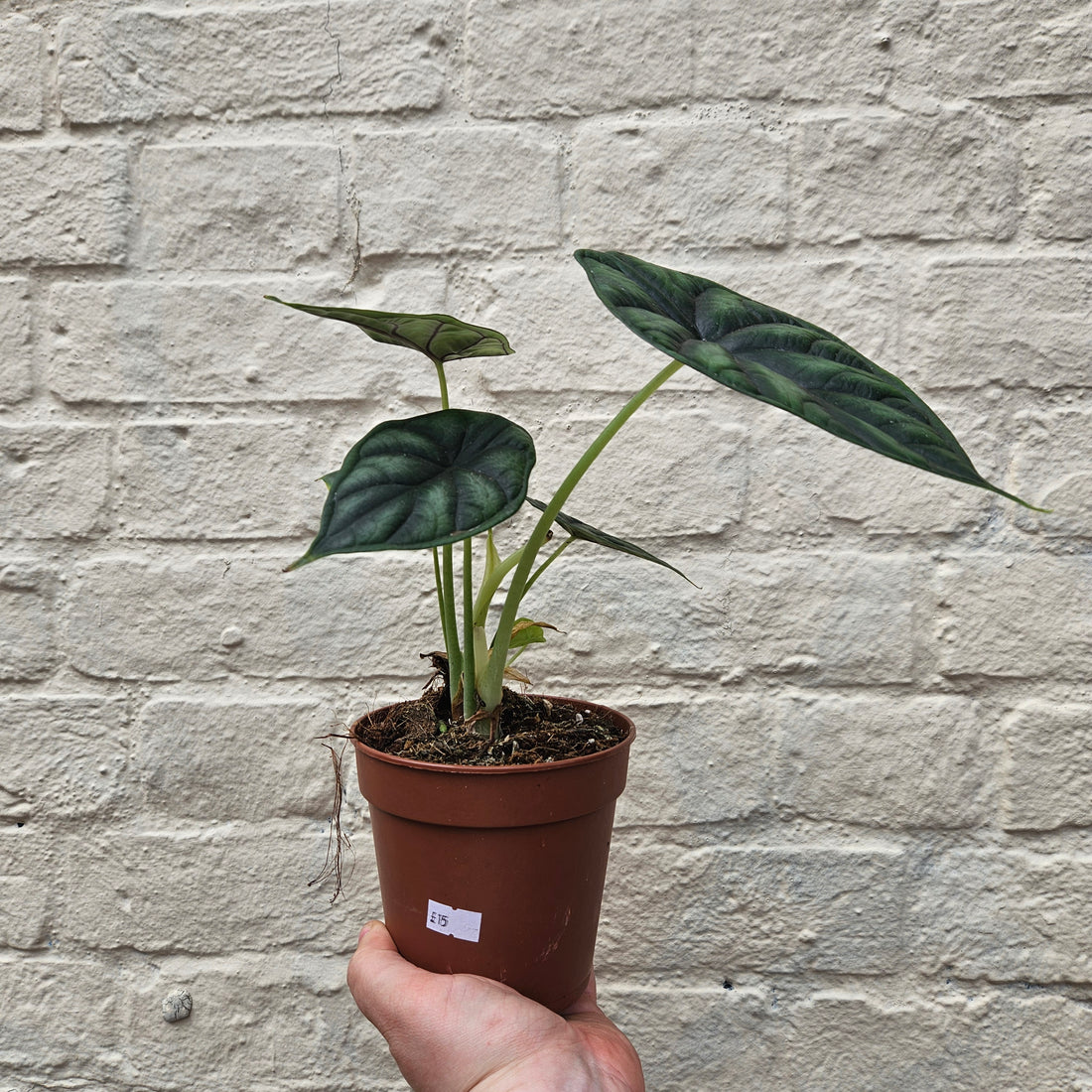 Alocasia baginda 'Dragon Scale'
