Why Sedum Makes an Excellent Indoor Houseplant
Sedum plants stand out because of their hardy, drought-tolerant nature, compact size, and low-maintenance requirements. Their succulent leaves store water, which means they resist occasional neglect and adapt well to indoor conditions.
They’re perfect for small spaces - desks, shelves, windowsills or grouped in succulent displays. Their understated, yet classic succulent appearance adds subtle greenery and texture to interiors, and they make excellent choices for people new to houseplants or with busy lives.
Sedum Care Guide
Sedum thrives in bright light - a windowsill or a well-lit room helps them maintain compact growth and healthy leaves. Avoid placing them in very dark corners for prolonged periods.
Use a well-draining, gritty or sandy compost or cactus/succulent mix. Water only when the soil is fully dry - overwatering can easily cause root rot.
- Temperature & Environment:
Typical indoor temperatures are fine. Avoid cold draughts or overly humid environments; low-maintenance succulent care suits standard home conditions.
Feed sparingly - succulents don’t need frequent feeding. A light feeding during the growing season is sufficient.
Keep an eye on soil dryness, avoid overwatering, and rotate the pot occasionally so the plant gets even light. For collections or mixed planters, ensure good drainage for all plants involved.
Frequently Asked Questions - Sedum Plants
What is a Sedum plant?
Sedum is a genus of succulent plants with thick, water-retaining leaves and stems. Many varieties stay small and compact, making them ideal for indoor succulent collections, windowsills, or small spaces.
Are Sedum plants easy to care for?
Yes. Because they store water, sedum plants tolerate occasional neglect and irregular watering, making them well-suited for beginners or people with busy schedules.
Where can I place a sedum plant in my home?
Sedum does best in bright, well-lit spots - a sunny windowsill, shelf near a window, or a bright, well-lit room. Ensure it receives enough light for healthy growth.
How often should I water a Sedum?
Only water when the soil is completely dry. Depending on light and indoor conditions, this might mean watering every 2–4 weeks. Over-watering is the most common issue with succulents.
Do Sedum plants need special soil?
Yes - use a well-draining compost or a specialist succulent/cactus mix. Good drainage is essential to prevent root rot.
Are Sedum plants good for small apartments or office desks?
Yes. Their compact size and low-maintenance nature make them perfect for desks, small flats, windowsills or offices.
Can Sedum survive with minimal light?
They prefer bright light. In low light, growth may be slow and colouration may reduce. For best results, provide as much natural light as possible.
Do Sedum plants grow big over time?
Most sedum varieties remain small or slowly expand - they don’t typically grow into large houseplants. Their compact nature is part of their appeal.
Our Promise
Each Sedum plant from Between Two Thorns is selected for health, compact growth and resilience. We pot and pack each one carefully in our Brighton studio to ensure safe delivery across the UK. If you’re after low-maintenance greenery that thrives on minimal fuss - our Sedum plants are a smart, stylish choice.


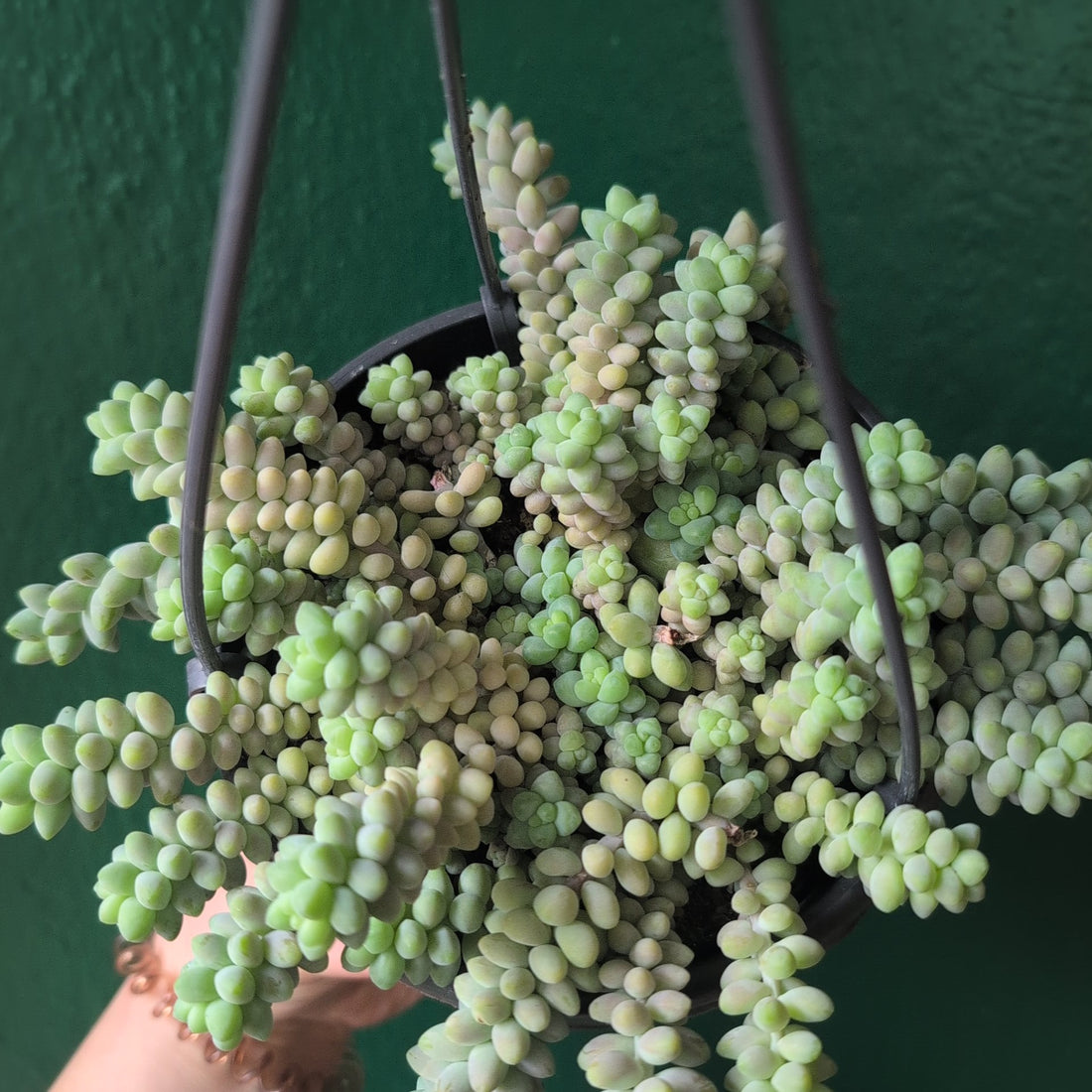
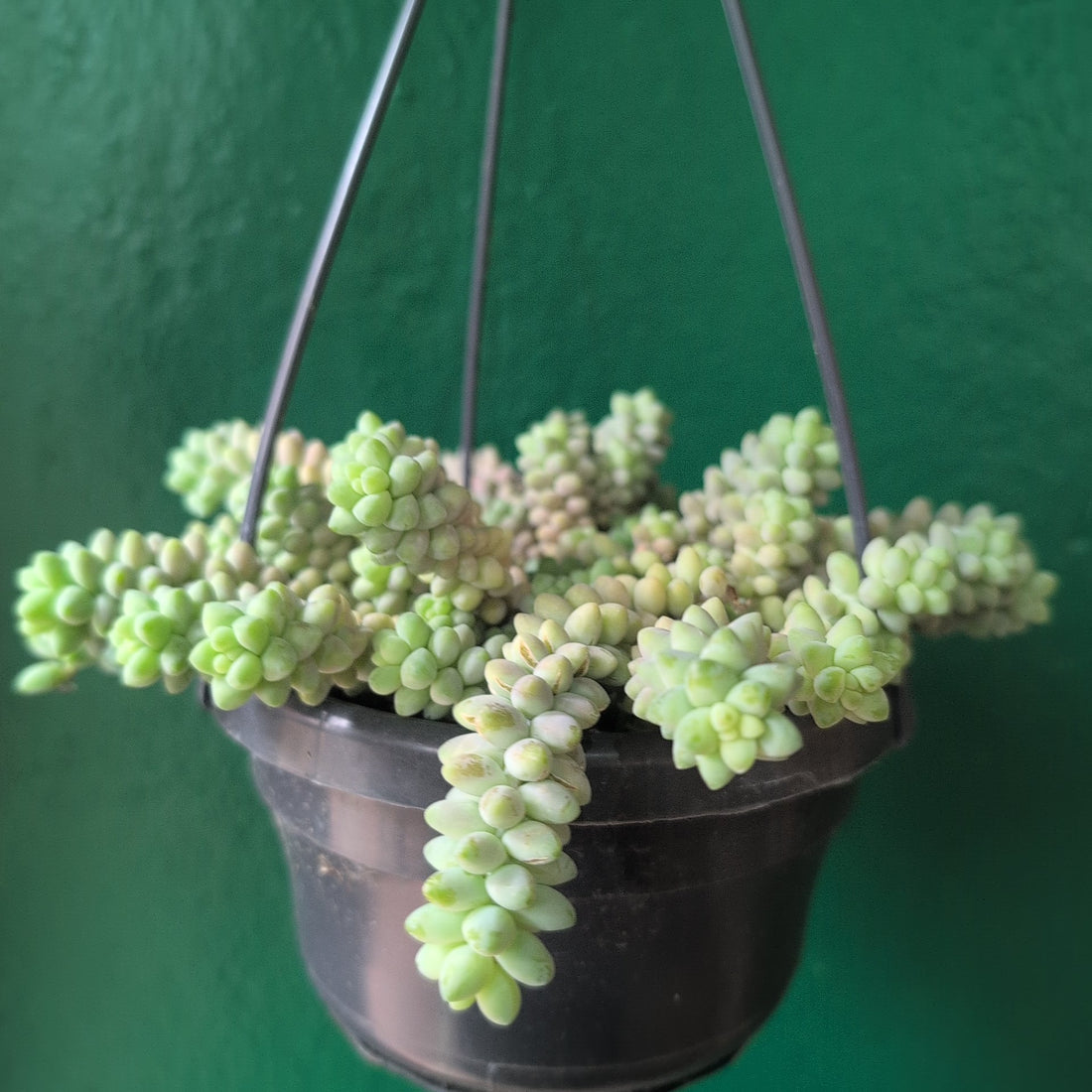 Sedum morganianum 'Burrito' (Donkey Tail)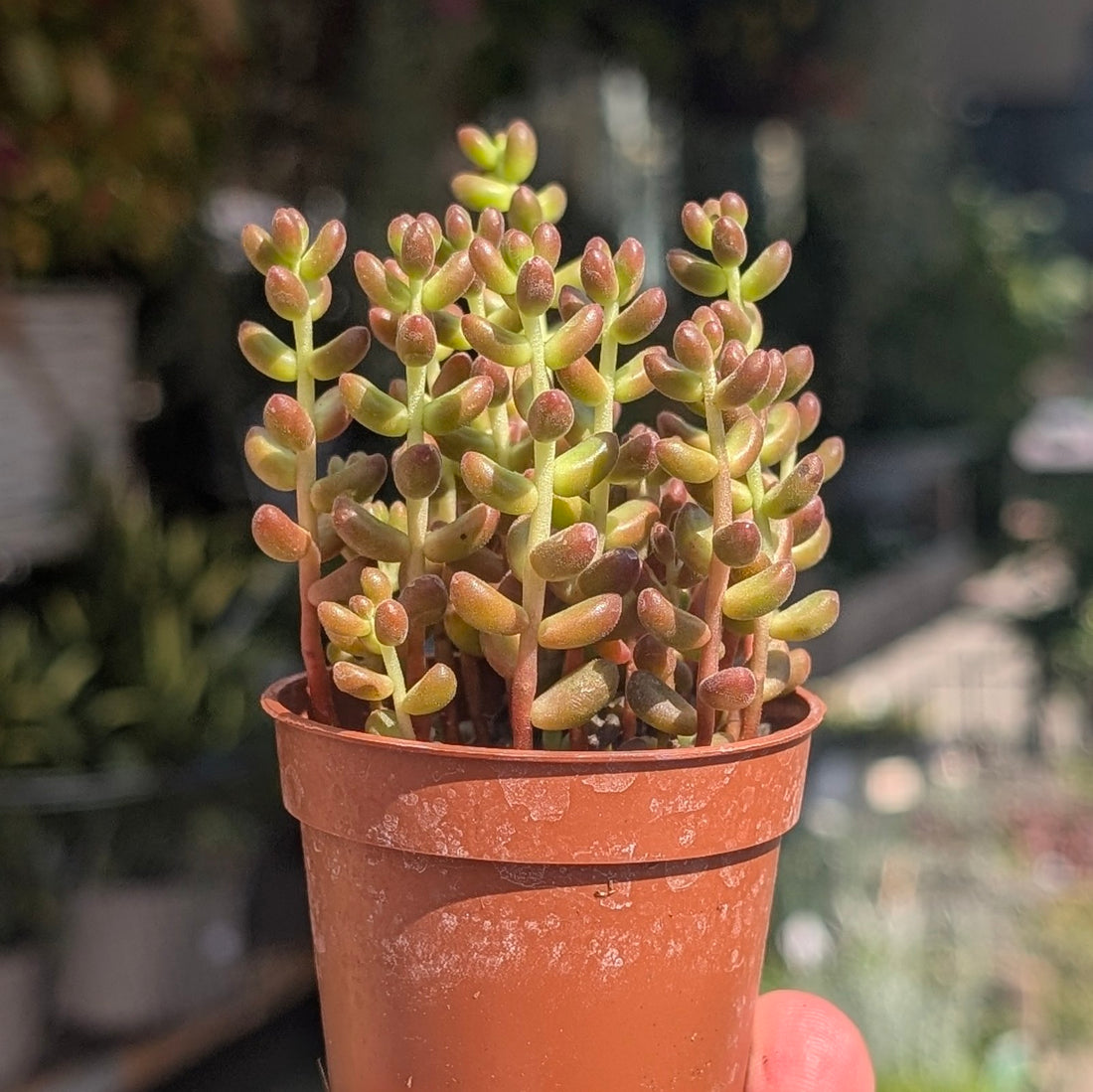
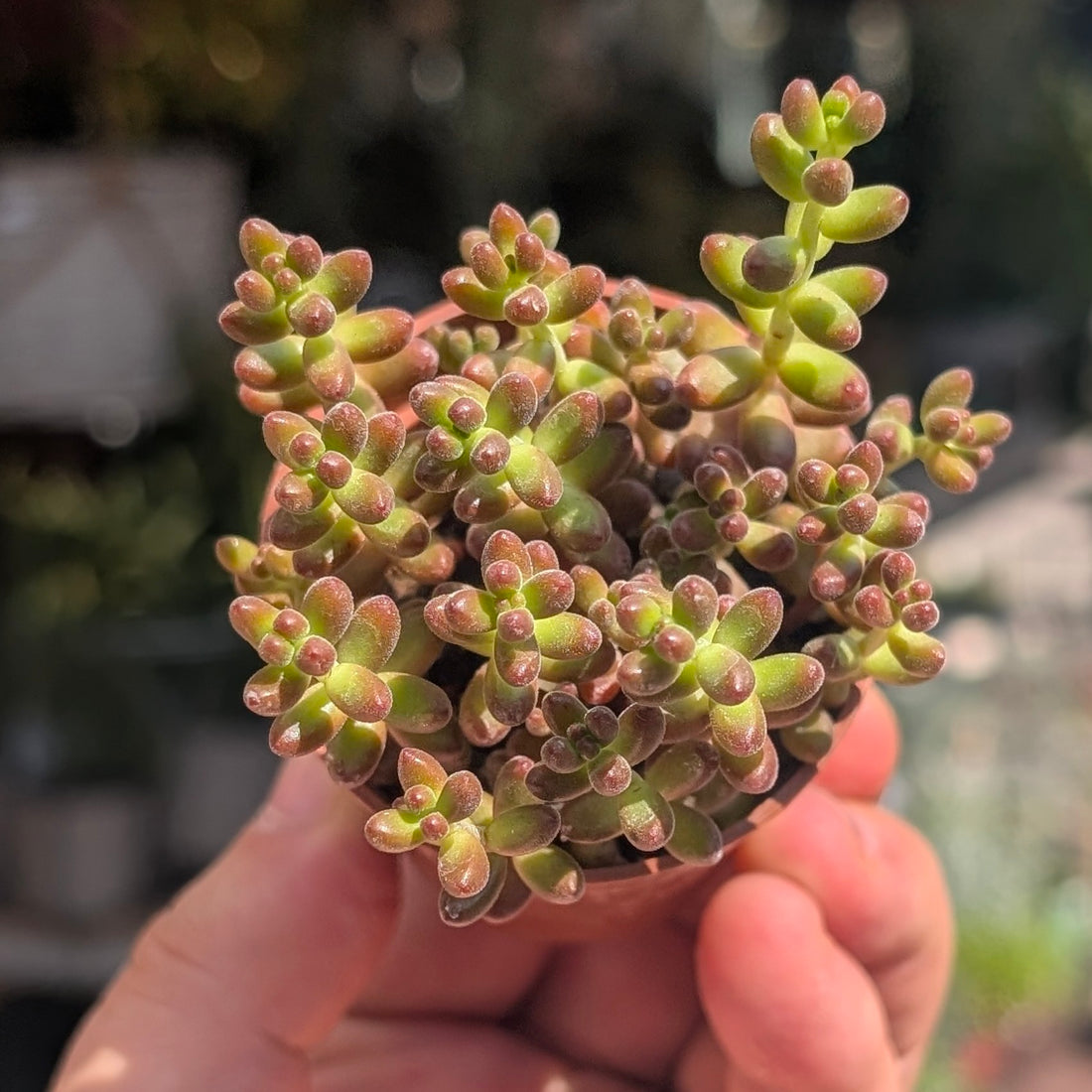 Sedum rubrotinctum (Red Jelly Beans)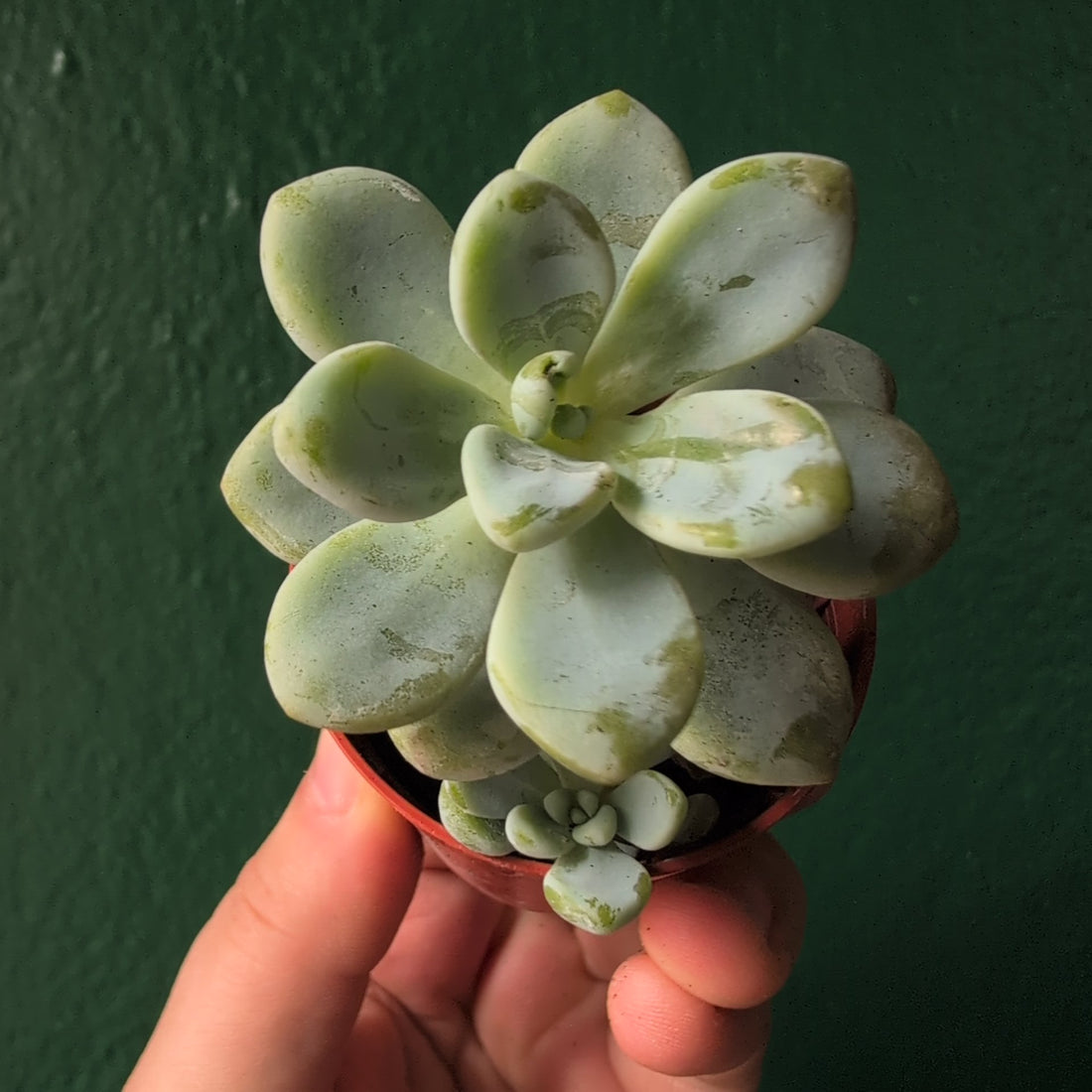
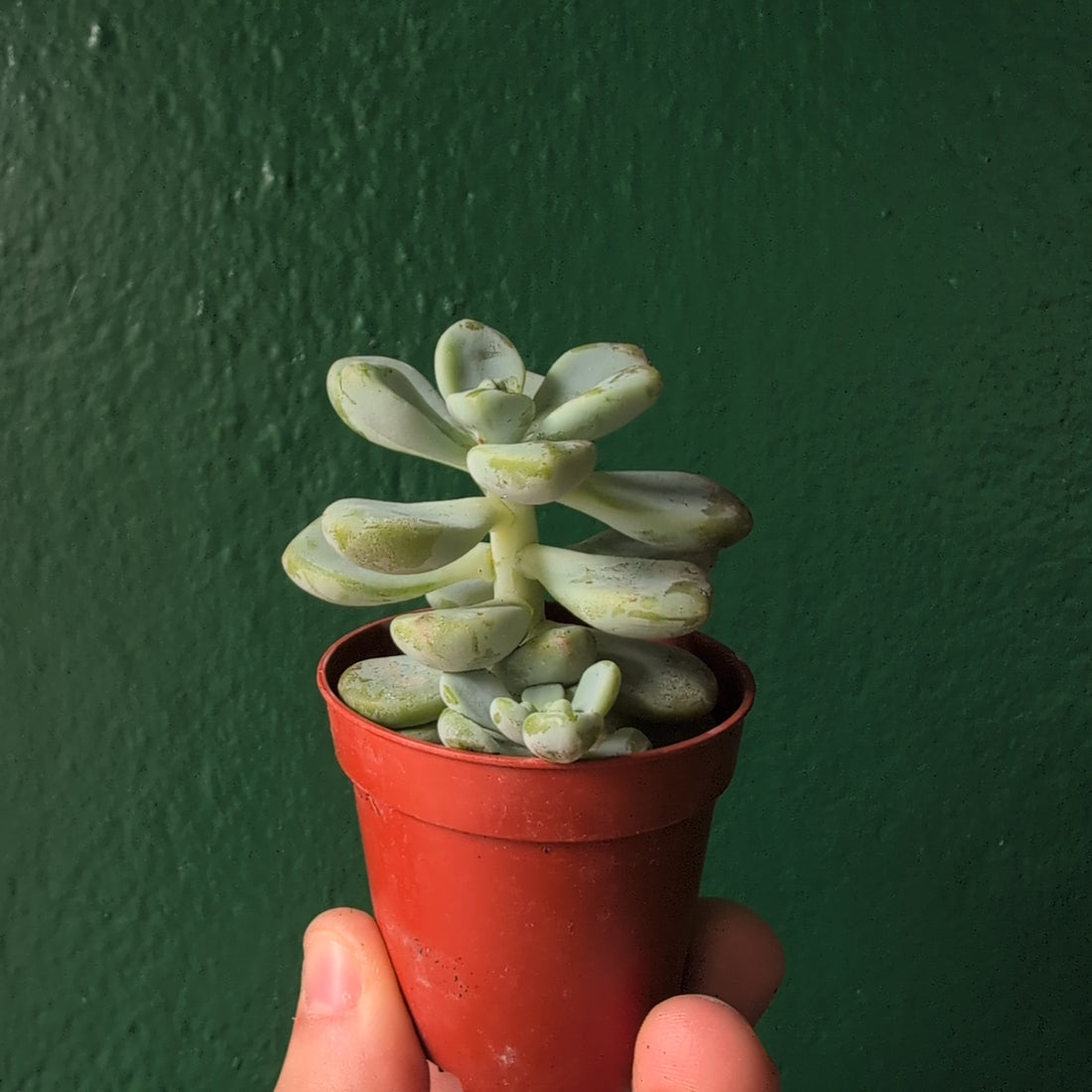 Sedum clavatum (Tiscalatengo Gorge Sedum)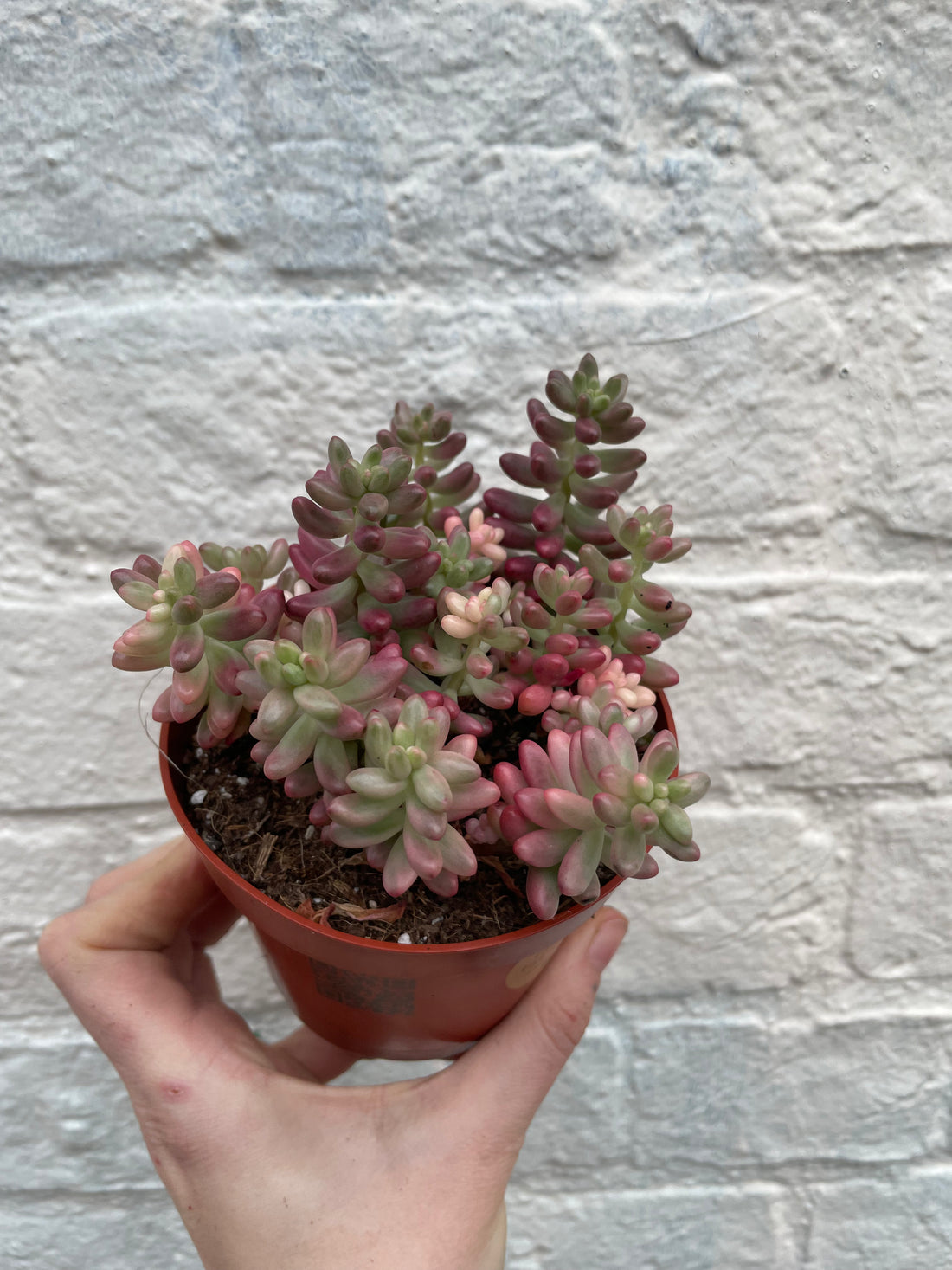
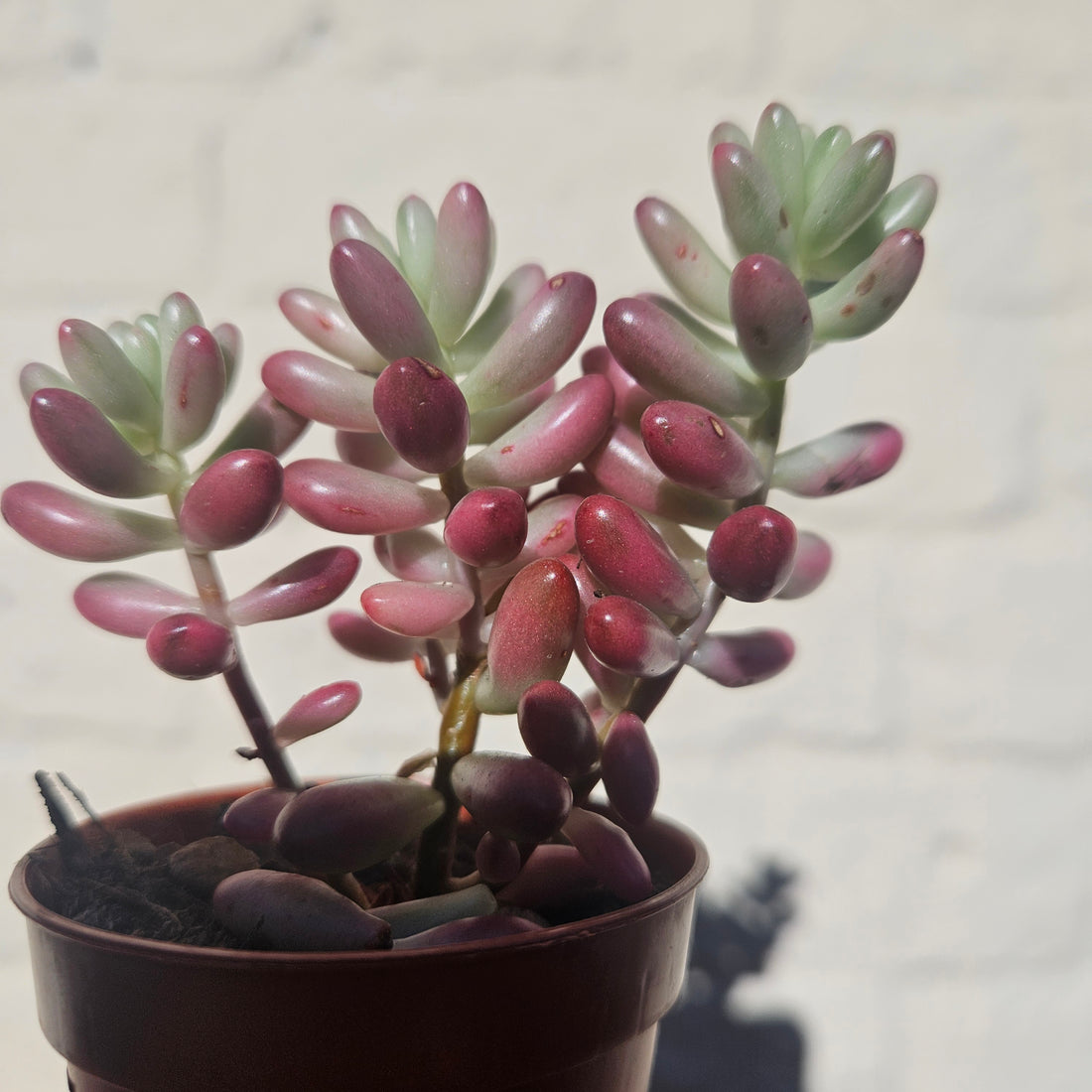 Sedum rubrotinctum rosea 'Aurora' (Pink Jelly Beans)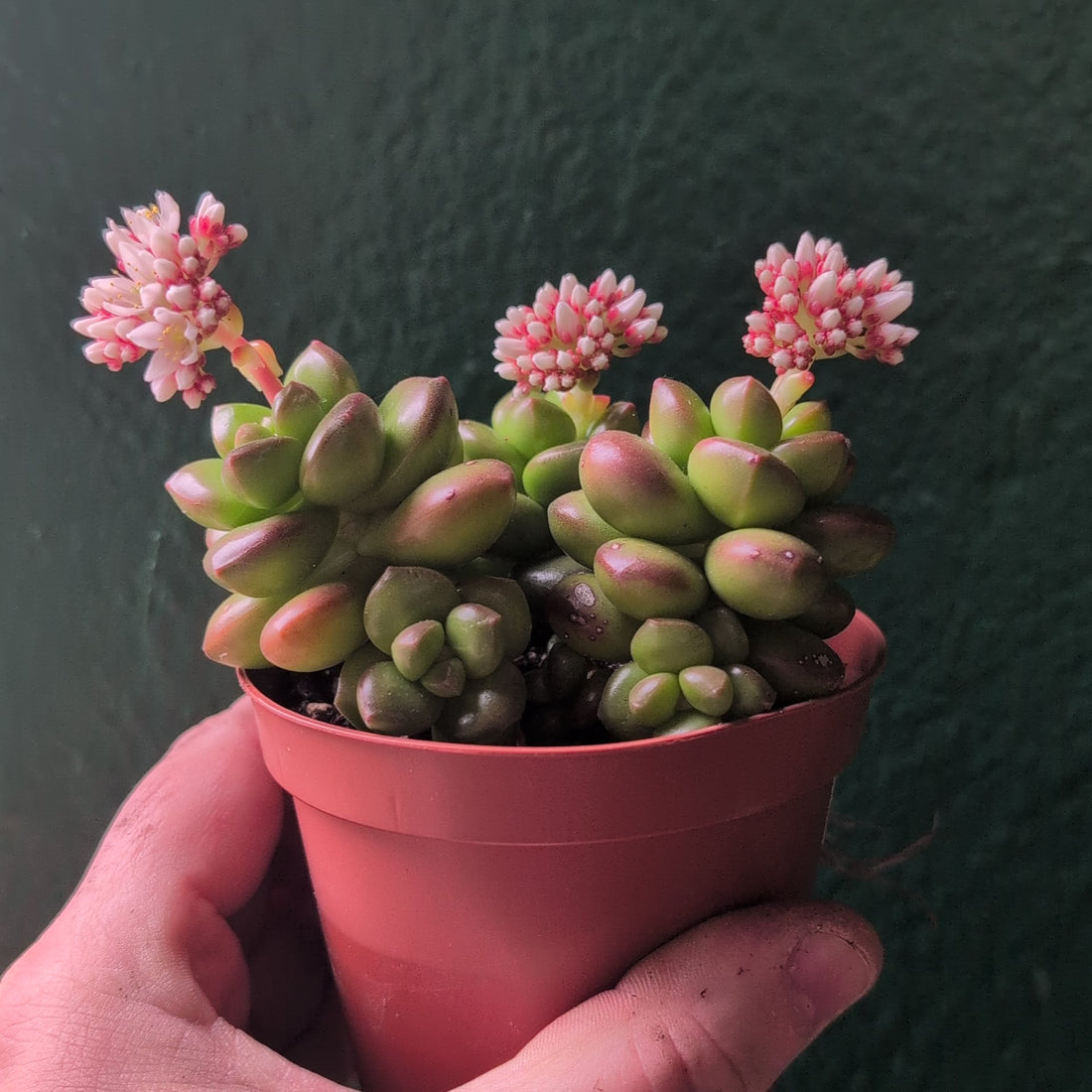
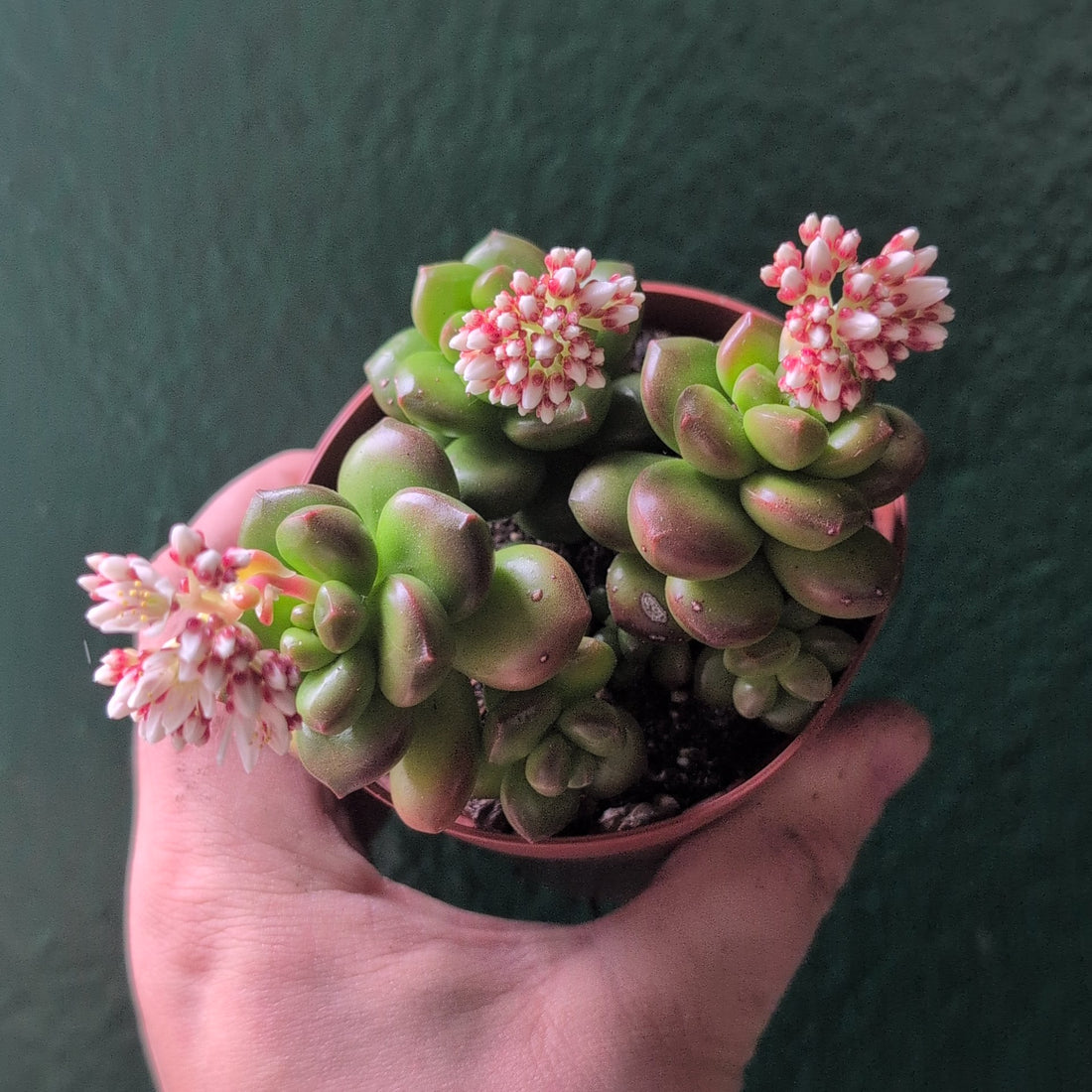 Sedum lucidum 'Obesum' 'Giant Jelly Bean'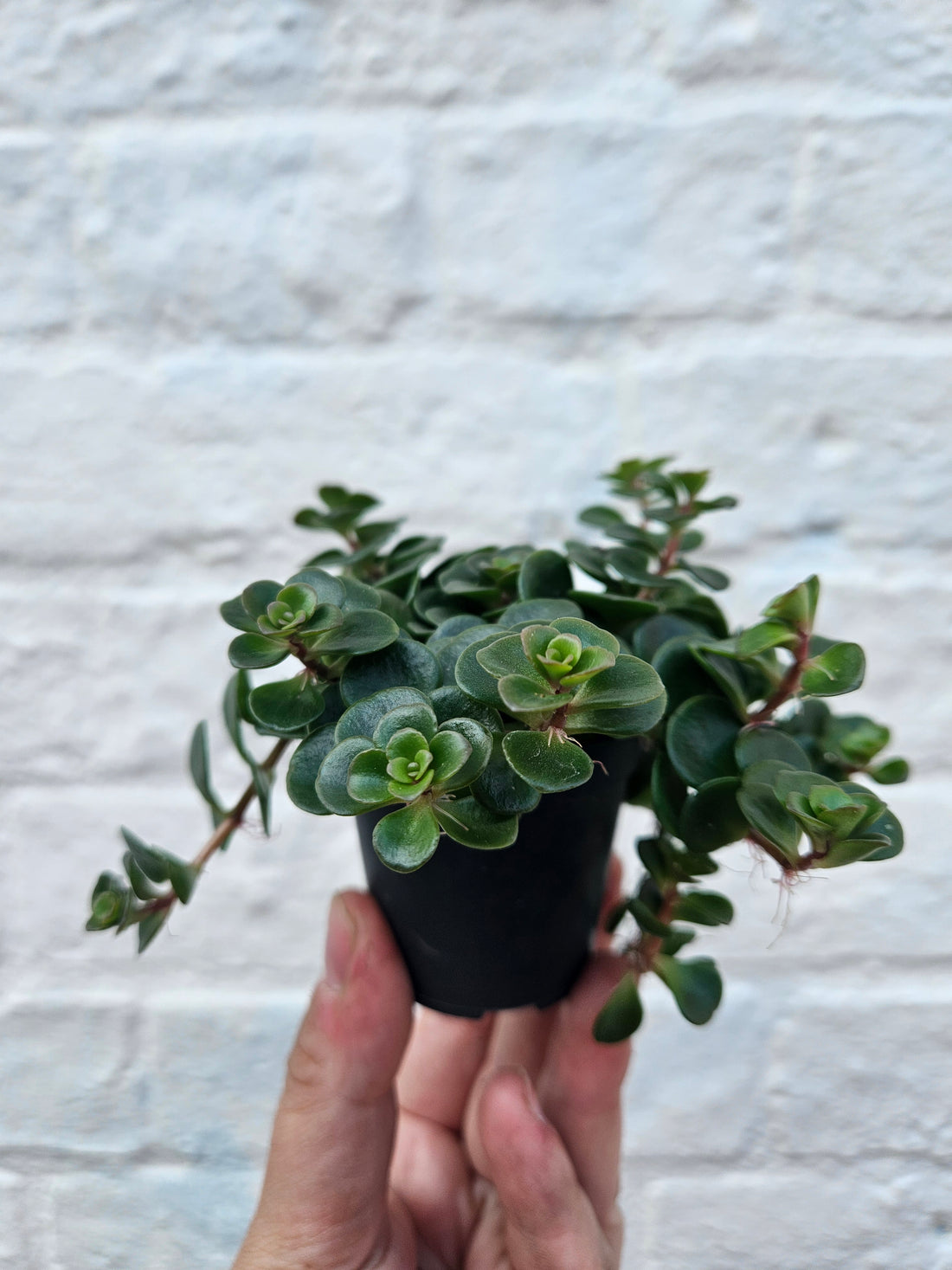
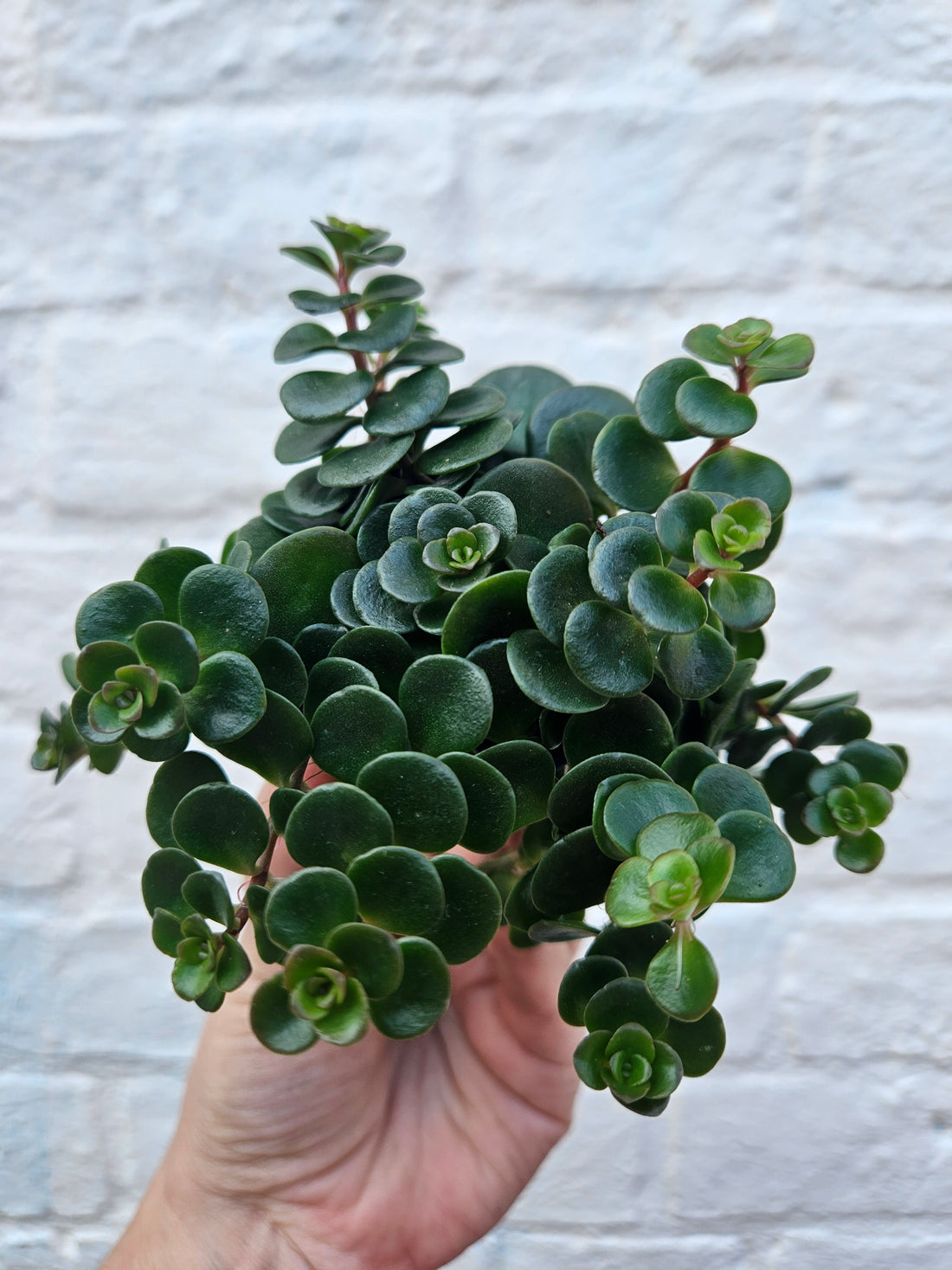 Sedum makinoi 'Tundra Tornado'
